
 สุโขทัย
Thailand's first kingdom, with serene Buddhas among lotus ponds.
Sukhothai, "Dawn of Happiness", was the capital of the first independent Thai kingdom in the 13th and 14th centuries, and is where the Thai script and much of the country's Buddhist art were born. Its historical park, a UNESCO World Heritage Site, is quieter and greener than Ayutthaya: ruined temples stand in landscaped grounds beside moats and lotus ponds, and the slender, graceful Buddhas of the "walking Buddha" style are the highlight.
The park is about 12 km west of the modern town, New Sukhothai. Most visitors rent a bicycle and explore the central zone, then visit the north and west zones by bike, tuk-tuk or songthaew. Further north, Si Satchanalai Historical Park offers a sister set of ruins with almost no crowds.
The best time to come is November, when Sukhothai stages one of Thailand's most beautiful Loy Krathong and candle festivals, with light shows among the ruins.
- Currency
- Thai baht (฿ · THB)
- UNESCO
- Historic Town of Sukhothai, listed 1991
- Getting there
- Sukhothai Airport (THS) has limited flights; buses from Bangkok take 6–7 hours
- Getting around
- Bicycle, electric tram or tuk-tuk
- Park fees
- About ฿100 per zone, plus fees for bikes and vehicles
- Best season
- November to February, cooler and dry
Top things to do in Sukhothai.
20 places we chose and described by hand. Open any of them, with photos, hours and directions, in the catalogue below or in the app.
Places to visit
- Wat Mahathat (Sukhothai) Central Zone
The kingdom's royal temple, with a lotus-bud chedi and rows of seated Buddhas.
- Wat Si Sawai Central Zone
Three Khmer-style prangs in the central zone, older than the Thai kingdom.
- Wat Sa Si Central Zone
A small, graceful temple on an island in a lotus pond.
- Wat Traphang Ngoen Central Zone
A serene lake temple with a large chedi and a walking Buddha.
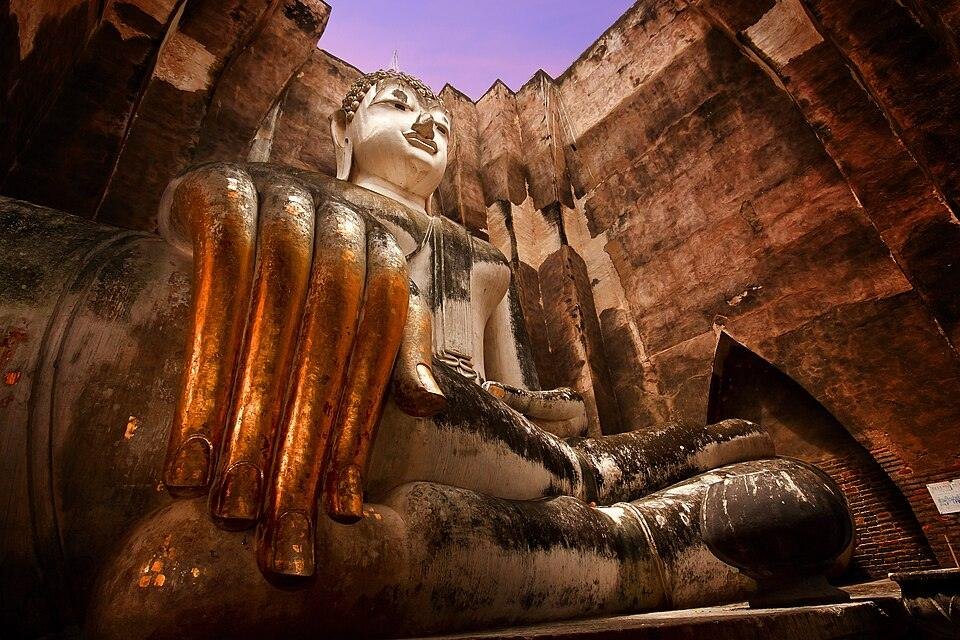
- Wat Si Chum North Zone
A 15-metre seated Buddha inside a tall brick walls, famously photographed.
- Wat Saphan Hin West Zone
A hilltop temple with a 12-metre standing Buddha and views over the plains.
- Wat Sorasak Central Zone
A bell-shaped chedi supported by carved stucco elephants.
- Ramkhamhaeng National Museum Central Zone
Sukhothai's artefacts, Buddhas and ceramics, with explanations of the kingdom.
- Si Satchanalai Historical Park Si Satchanalai
A quiet sister set of ruins with an elephant-buttressed chedi, an hour north.
Restaurants
- Sukhothai Noodle Shops New Sukhothai / Park
Try the town's sweet-sour noodle soup with pork, peanuts and dried chilli.
- New Sukhothai Night Market New Sukhothai
A lively evening market with grills, noodles and cheap souvenirs.
- Lakeside Cafés near the Park Old city
Relaxed cafés and restaurants with garden seating beside the ruins.
Activities
- Cycling the Historical Park Historical Park
Rent a bike and ride between temples, moats and lotus ponds.
- Loy Krathong & Candle Festival Historical Park
Floating lanterns, candlelit ruins and performances in the birthplace of the festival.
- Thai Cooking Class New Sukhothai
Learn Sukhothai noodles and other northern-central dishes.
Hotels & stays
- Heritage Hotels near the Park Old city
Garden resorts and lotus-pond guesthouses just outside the ruins.
- Luxury Resorts in the Old City Old city
Upscale villas in landscaped grounds beside the historical park.
- New Sukhothai Guesthouses New Sukhothai
Cheap rooms in the modern town, with easy access to food and buses.
Shopping
- Sangkhalok Ceramics & Crafts Old city
Replicas of the region's famous celadon pottery, plus silver and textiles.
- New Sukhothai Fresh Market New Sukhothai
A big local market for produce, snacks and everyday goods.
Explore all 538 places in Sukhothai.
We couldn’t load the places. Check your connection and try again.
No places found.
Try a broader search or another category.
From the Thailand Guide app’s catalogue: OpenStreetMap places with traveller notes from Wikivoyage and photos from Wikimedia Commons. Photos marked “Representative” show the same kind of place, not this exact one. Neighbouring islands and day-trip areas may be included. “Open now” uses listed hours in Thailand time; confirm hours and access before travelling.
Best time to visit Sukhothai.
The best time to visit Sukhothai is November to February. Sukhothai has a hot tropical climate with a clear dry season. November to February is cooler and the best time to explore the ruins, with the Loy Krathong festival in November. March to May is very hot, and the rainy season from June to October brings heavy afternoon rain, but the park is green and quiet.
Approximate long-term monthly averages in °C and millimetres of rain. These are planning notes, not a weather forecast.
Sukhothai travel tips.
Temple etiquette
Cover shoulders and knees, remove shoes before entering halls, keep your head lower than monks and Buddha images, and never climb on or pose disrespectfully with statues.
Loy Krathong's birthplace
Sukhothai is often called the birthplace of Loy Krathong, and celebrates it with floating lanterns, candlelit processions and performances in the park.
Cycling etiquette
Keep to the paths and don't climb on the ruins. Many structures are fragile and restoration is ongoing.
Sukhothai noodles
The local noodle soup comes with pork, crushed peanuts, dried chilli and morning glory, sweet and slightly tart, unlike anywhere else.
Keep your cool (jai yen)
Staying calm and smiling solves most problems in Thailand; raised voices lose face for everyone.

Plan Sukhothai on your phone.
Save places, see what is open now, check the weather and air quality, and browse all twenty guides in the free Thailand Guide app. Works offline.